
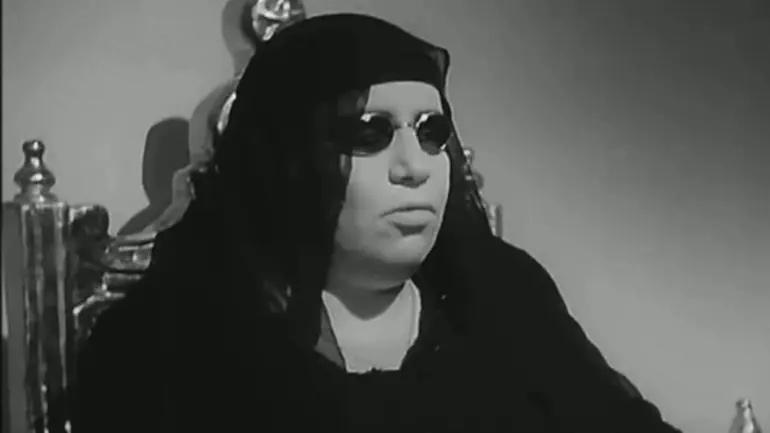
At the turn of the 20th century, Cairo’s streets were crowded with black yashmaks and red fezzes at the turn when the British-controlled Khedives ruled Egypt. When one first sees the women of the day, wrapped in layer upon layer of required loose black fabrics, it’s only natural to infer that the gradual tide of the rights movement has brought us much further ahead, to an era of women’s choice, albeit limited.
Rather ironically, a story from a long-forgotten period of history hidden away in Pandora’s box challenges this presumption. 100 years ago, in some of Egypt’s most orthodox societies, Muslim women enjoyed a right that they do not today. Female Quran reciters were educated, trained, and well-known before the now-ubiquitous “sot el mara ‘awrah” became a rallying cry for misogynists.
Strong, angelic-voiced Sheikhas, a title no longer used in Egypt, controlled much of Islamic society until World War II. Hundreds of highly skilled and in-demand female Quranic reciters moved around the cities and towns of Egypt. The most well-known of them was Sheikha Munira Abdou, whose few surviving images all appeared to be 1920s fantasy-punk songstresses.
The Sharqeya-born woman started reciting in 1920 at funerals in her city. Donning dark lipstick, circular dark spectacles reminiscent of Ozzy Osbourne, and a draping black veil, Abdou began her career at the young age of 18.
At the time, a Sheikha was required to recite the Quran for women because funerals lasted a lengthy six days, divided into three days for male and female mourners in different rooms.
First, the profession of Sheikhas was established by deciding that only female or blind reciters, both of whom Munira was, could be invited to female funeral days. Second, by putting women to work inside the strict, morally upright confines of religion, a certain amount of latitude was provided, perhaps more quickly than the uphill battle educated, urban women faced to enter other fields like medicine or the arts.
Women had few educational and professional options throughout the first half of the 20th century. Famous feminists battled alongside Huda Al Shaarawi for broader access to education, including Nabawiya Moussa, the first female high school graduate, in 1907. A small group of women began attending King Fouad University in 1929, and Kawkab Hefny Nassef, the first female surgeon in the nation, graduated in 1932. However, scholar and social scientist Dr Soha Abdel Kader said, “It was mainly the girls of bourgeois families who benefitted.”
Small community-run elementary schools where village children taught fundamental skills in reading, writing, math, Islamic studies, and — crucially for our angel-voiced heroine — Quranic recitation served as the primary source of education for women in rural areas. Sheikhas like Munira Abdou was propelled into existence by the same conservatism that demanded that men and women be kept apart, combined with the class prejudice that saw rural women’s education dedicated to Islamic instruction.
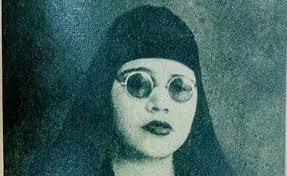
Sheikha Munira was one of many successful female reciters of her time; Sheikhas Nabaweya Nihas and Karima Al Adliya also found popularity, but she was unquestionably the most sought-after. Throughout her career, she received numerous nominations for honours, and the late author Mahmoud Al Saadani even wrote her biography, “Melodies from Heaven,” about her life. When she first entered the scene, the Arab World was shaken, and soon she was on par with the most potent sheikhs in Egypt, according to Al Saadani.
Sheikha Mounira immediately moved the Arab world, and soon, she was on par with some of Egypt’s most loved voices. The young woman with an angelic voice who was tiny and blind and ascending through the ranks of Islamic society was placed on an equal footing with luminaries like Sheikh Mohamed Refaat.
A wealthy Tunisian merchant decided to fly to Egypt and stay there the entire month to hear her voice after Abdou turned down his invitation to read the Quran on his property for Ramadan. The highly acclaimed Abdou was offered EGP 1,000 (a sizeable sum at the time) to fly to the seaside city of Sfax, join him during Ramadan, and recite the Quran for him in his estate, according to Saadani. This information is also revealed in the book. She denied his offer, so he resigned to fly to Egypt and stay there for a month to speak with her.
Munira Abdou achieved commendable achievements in her short career. Sheikha Munira, who was 32 then, was chosen as the first female Quran reciter for Egyptian Radio when it began broadcasting in 1934. She immediately rose to prominence far beyond Egypt’s boundaries and was one of the most prominent reciters of her era.
Even though she was rather popular, she still only made EGP 5 for every EGP 10 Sheikh Mohamed Refaat made. Abdou’s half-wage was a significant accomplishment, even though we are now aware of the morally complex problem of gender pay inequalities. She soon began to broadcast her recitations on radio stations in London and Paris.
Even though this freedom was sincere, it was only temporary. The invention of the radio, which allowed female reciters to be heard by men on a mass scale for the first time, was a significant factor in the imposition of Islamic law. It was too good to be true.
Just before the onslaught of World War II, Al Azhar issued a fatwa deeming the woman’s voice to be a sort of ‘awrah, or nakedness, and could not be broadcast reading the sacred words of the Quran. Despite a flurry of public protests from her supporters and longtime listeners, the radio stations that had once included Abdou’s recitations in their regular schedule promptly ceased airing the Sheikha.
One famous reciter, Sheikh Shaisha’a, intervened after the fatwa and criticized it as an “intellectual regress,” pointing to the predominance of female reciters in the media and political circles. Reciters like Sheikha Umm Al-Saad were abruptly forced into retirement after spending more than 60 years training male reciters like Sheikh Ahmed Neina’a and Moftah Al Sultani.

The radio management staff at stations in Egypt, Paris, and London refused to resume their programming out of concern for Al Azhar’s reaction. This was despite the Sheikhs of Al Azhar’s inability to link their fatwas to Hadiths in the Quran and strong opposition from some peers in the Islamic community and viewers of female recitation.
Abdou spent the rest of her time in her house listening to old reciters’ recordings from when they were younger and was often reported as saying that time robs the voice of its beauty. Only a small number of her recordings exist today, thankfully one of which is ‘Ya Rasool Allah’ (O Messenger of God), her most well-known initial. Sadly, female recitation is no longer prevalent outside of radio, and many modern Muslims are unaware that there ever was.

 fashion editor & content creator